

Spanish Citizenship
Get the world's 2nd best passport within reach and enjoy the freedom to travel, work, and live throughout Europe.
Spanish Citizenship: A Solid Future for You and Your Family
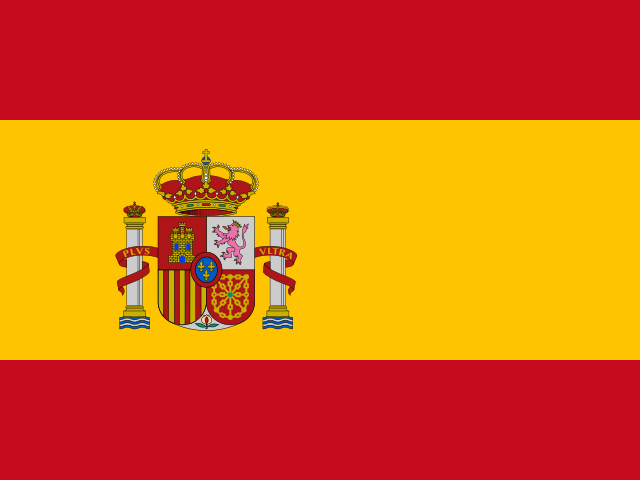
With Spanish citizenship, you unlock access to over 190 countries and gain the right to live, work, and study anywhere in the European Union.
There are several ways to acquire Spanish citizenship, whether by descent, residence, or marriage, each with its own specific criteria:
- By Descent: Spanish citizenship follows the principle of "jus sanguinis," allowing it to be passed from parents to children and, in some cases, to grandchildren. This means that direct descendants of Spanish citizens, such as children and grandchildren, may have the right to apply for citizenship, even if they were born outside of Spain.
- By Residence: Foreigners residing legally in Spain can apply for citizenship after a set period of time. Generally, 10 years of residence are required, but for citizens of Ibero-American countries, such as Brazil, this period is reduced to just 2 years.
- By Marriage: Spouses of Spanish citizens may apply for citizenship after 12 months of legal residence in Spain, provided they meet the legal requirements.
Who Is Eligible for Spanish Citizenship by Descent?
CHILDREN
Citizenship by Descent
The general rule is: Children of Spanish citizens born outside of Spain can obtain citizenship, provided they meet certain requirements.
GRANDCHILDREN
Citizenship by Descent
Thanks to the Democratic Memory Law (Ley de Nietos), grandchildren of Spanish citizens who fled the country for political, ideological, or religious reasons can apply for citizenship, regardless of their age or whether they have ever lived in Spain.
Benefits of Spanish Citizenship

A Lasting Legacy
Pass on Spanish citizenship to your children and grandchildren, giving them the freedom to choose where to build their lives.

Greater Mobility
Travel, live, and work freely in any of the 27 European Union countries, without the need for a visa or residence permit.

Quality of Life
Ranked as the 23rd safest country in the world by the 2024 Global Peace Index, Spain offers peace of mind for you and your family in a stable and welcoming environment with access to quality healthcare, excellent educational institutions, and global opportunities.

Passport
Ranked as the 2nd most powerful in the world in 2025. With a Spanish passport, you can travel visa-free to over 190 destinations, including Japan, Canada, and the United States.

Cost of Living
Among the top destinations in Europe, Spain stands out as one of the most affordable countries. With a cost of living up to 40% lower than in the UK, you can enjoy a comfortable lifestyle without breaking the bank.

Dual Citizenship
Spain allows dual citizenship for citizens of Portugal, Andorra, the Philippines, Equatorial Guinea, and Latin American countries, such as Brazil. This means you can enjoy the benefits of being a Spanish citizen without losing your rights and ties to your home country.
Required Documents
List of documents generally required for the Spanish citizenship application process:
- Applicant's Birth Certificate: Apostilled and accompanied by a sworn translation;
- Spanish Ancestor's Birth Certificate: Essential document to prove the line of descent;
- Foreign Parent's Birth Certificate: Necessary to supplement the family bond analysis;
- Parents' Marriage Certificate: Required, if applicable, to prove the relationship between the parents;
- Criminal Background Checks:
- From the country of origin, duly apostilled and translated by a sworn translator.
- From the place of residence for the last five years, also translated and apostilled.
- Other documents that may be required, depending on the type of citizenship requested.
We Make the Process Easy for You:
Citizenship by descent, residence, or marriage. Regardless of the path chosen, our partners offer full support to ensure the citizenship process is simple and efficient.
We handle:
- Process Management: Complete organization and oversight of the entire procedure.
- Document Review and Translation: Verification of documents and coordination of sworn translations to ensure compliance.
- Genealogical Research and Certificates: Locating documents such as birth and marriage certificates, when necessary.
- Application Submission and Tracking: Preparation, submission, and monitoring of progress with the competent authorities.
- Follow-up Sessions: Meetings to review progress and answer questions.
- Exam and Oath Preparation: Assistance with mandatory exams (CCSE/DELE) and the oath of allegiance.
- Support for Official Appointments: Planning and scheduling with administrative bodies, such as town halls, consulates, and police stations.
- Personalized Guidance: Specific support based on your chosen path to citizenship.
- Troubleshooting: Help resolving complications during the process.
More Information
- Article: How to Obtain Spanish Citizenship by Descent and Naturalization
- Article: Grandchildren's Law: Changes to Spanish Citizenship in 2022
- Article: The 3 Most Common Citizenships by Descent Among Brazilians
- Podcast: Everything You Need to Know About Spanish Citizenship - with Roberta and Camila (Emigrar.me)
Is Spanish Citizenship Right for Me?
We Recommend Spanish Citizenship For:
- Those who want easier access to other European countries, whether for work, study, or business.
- People with Spanish ancestry interested in exercising their right to citizenship through family ties.
- Families Who Want to Secure a Future in the EU for Their Children: Spanish citizenship is transmissible, opening doors for future generations in terms of study, work, and quality of life.
- Those Interested in Citizenship via Fast-Track Residency: For Brazilians and other citizens of Ibero-American countries, the required period of legal residency is only 2 years, instead of the usual 10 years.
We Do Not Recommend Spanish Citizenship For:
- People without proven ties to Spain: Spanish citizenship requires proof of ancestry or other legal connections, which may not be feasible for those with no existing links.
- Those who prefer citizenship options by residency without taxation: For citizenship by naturalization, you will need to become a tax resident in Spain. Portugal may be a more attractive option for obtaining citizenship without tax residency through the Golden Visa.
Frequently Asked Questions (FAQ)

- Analysis of complexities and potential issues in the process.
- Identification of potential challenges and strategic management to ensure a more efficient process.
- Services mentioned in the “we make the process easy for you” section.
- Management of specific complexities.
- Assistance with cases requiring extra attention due to missing documents, special requirements, or other difficulties.
- European certificates (if applicable).
- Obtaining and legalizing necessary documents from other European Union countries.
- Shipping and document logistics costs.
- Secure and trackable document shipping between countries, ensuring timely delivery.
- Full end-to-end case management.
- Monitoring of deadlines and updates with Spanish authorities, as well as ongoing support.
- Costs for Brazilian certificates (notary fees, etc.)
- Apostille costs
- Sworn translation costs
As an annual member of the Settee Community, you receive a 200 USD discount on citizenship as the primary applicant.
For each additional dependent, you receive a 200 USD discount on the citizenship process.
The Democratic Memory Law, also known as the "Ley de Nietos," is legislation that simplifies the citizenship process for descendants of Spaniards who faced persecution during the Spanish Civil War and the Franco dictatorship. It allows children and grandchildren of Spanish citizens to claim their citizenship with no age restrictions.
For more details, see our article: Ley De Nietos: Changes to Spanish Citizenship
In 2025, Spanish citizenship can be requested by:
- Children, grandchildren, and great-grandchildren of Spanish exiles: Including those who left the country during the Spanish Civil War, in accordance with the Democratic Memory Law.
- Spouses of Spanish citizens: Provided they meet specific legal requirements.
- Legal residents in Spain: Foreigners who have lived in the country for the minimum period required by law.
The Democratic Memory Law has expanded citizenship rights, allowing more descendants of Spanish citizens to claim this benefit based on their heritage.
The deadline to apply for Spanish citizenship under the Democratic Memory Law is October 21, 2025. It is highly recommended to start the process as soon as possible to avoid potential delays or complications.
The first step to obtaining Spanish citizenship is to gather the necessary documents that prove your connection to your Spanish ancestor, such as birth, marriage, and death certificates. If you are applying through marriage, you will also need to provide documents that prove the marital relationship.
After gathering the documents, the application can be submitted through the nearest Spanish consulate or directly in Spain if you reside in the country. Each route has specific procedures, and professional guidance can help streamline the process.
Typically, you need to present documents such as a birth certificate, criminal record check, and proof of your connection to the Spanish citizen, such as the birth certificate of your Spanish grandfather, grandmother, mother, or father.
You do not need to reside in Spain to obtain citizenship by descent, as the process can be carried out at a Spanish consulate. However, for those seeking citizenship through residency or marriage, a minimum period of legal residency in the country is required.
Yes, your surname is not a deciding factor. What truly matters is presenting documents that prove your family relationship with the Spanish ancestor, such as birth, marriage, and death certificates, clearly demonstrating the line of descent.
The processing time can vary depending on the case and the workload at the consulate, but it generally takes 2 to 3 years in total.
Yes, it is possible to apply for citizenship even if your Spanish grandfather or grandmother has passed away, provided you present documents that prove your descent.
Even if a great-grandfather lost his Spanish nationality, there may still be a right to citizenship, especially in cases of exile or loss due to marriage. It is essential to conduct a detailed case assessment to verify the legal possibilities and determine the next steps.
Yes, children and grandchildren of Spanish citizens can acquire citizenship, provided the lineage is proven and all requirements are met.
Depending on the rules of your home country, Spain allows dual citizenship for citizens of Portugal, Andorra, the Philippines, Equatorial Guinea, and Latin American countries, such as Brazil. If you are from one of these countries, you can retain your original citizenship upon acquiring Spanish citizenship.
With Spanish citizenship, you can live and work in any country within the European Union. Furthermore, a Spanish passport offers the advantage of visa-free travel to over 180 countries, including all members of the Schengen Area, significantly expanding your global mobility.
Yes, by obtaining Spanish citizenship, you gain access to the healthcare and education systems in Spain and other European Union countries.
Yes, descendants of Sephardic Jews are eligible to apply for citizenship, provided they can prove their connection to the Sephardic community through historical and cultural documentation.
No, after your citizenship is approved, you must apply for a Spanish passport separately; we can also assist you with that application.
Spanish citizenship itself does not mandate tax payments, but anyone who becomes a tax resident in Spain will be subject to taxation according to the country's tax laws.
We can issue an invoice for the service. Please send us your preferred billing address.